
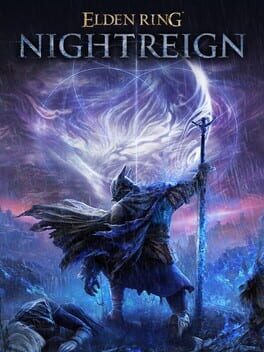
I've played a lot of Nightreign. I'm still playing a lot of Nightreign. In the month and a half it's been out, it quickly became a member of the hundo club, it got me fully back into wiki editing and data mining, and even after beating every nightlord numerous times and completing every character quest I'll still cheerfully hop into a run any time anyone asks. The only reason I'm marking this "completed" now is because I want to get this review out of my head and onto the web.
If you'll permit a digression, I deeply admire Elden Ring's parsimony. It's a huge game made be a relatively small company who had largely made relatively small games up to that point, and it accomplishes that with an economy of design I consider admirable. I know people complain about the re-used bosses, but there are actually very few of the 165 that are true duplicates of one another. Instead, they add little variations here and there, pair them with other bosses for duo encounters, or ramp up the complexity of their abilities over the course of the game. The small dungeons are the same way: they take a limited set of shared components, then mix and match them in different novel ways. These raw materials are a palette of paints that they re-use and recombine over and over to paint the entire game.
Most large games work this way to some extent, but in Elden Ring the quality of the design at each point really shines through in large part because it draws attention to the patterns and repetitions. You know a catacomb is going to have imps or skeletons and some sort of clever trick, you know a watchdog is going to do some kind of elemental damage, you know a hero's grave is going to make you want to claw out your eyes. But you don't know exactly how—it sets up just enough expectations for it to be able to play with them and continue to surprise you throughout its massive length.
If Elden Ring is a painting and its palette, Nightreign is another artist picking up the same palette and painting something entirely different. It stands as much in the tradition of unofficial mods as it does the tradition of classic soulslikes—it's related to Elden Ring in more or less the same way Defense of the Ancients is related to Warcraft III. The nouns and verbs are largely the same, but the context in which they exist is completely different and utterly surprising. After spending more than a decade as industry trendsetters, carving out a new genre and driving other studios insane trying to match their success in it despite going against all conventional wisdom, From Software has now put out a game that is itself reacting to trends in the industry. Not only that, it's integrating two trends—battle royales and…