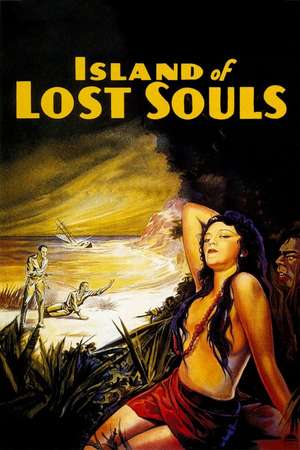
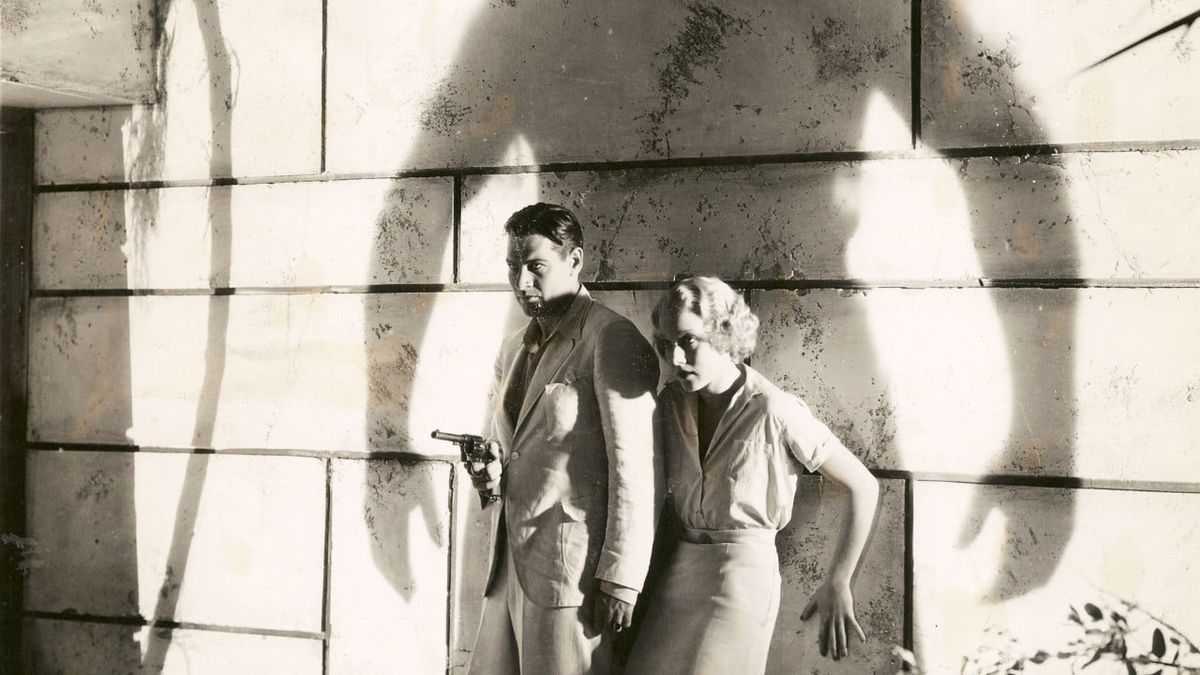
This is deceptively compelling. At first glance, the
ape men, broken english, and doctrine that all animals
converge on the perfect (evidently white) human form
feels teleological with a distinct flavor of eugenics.
But as the film progresses, it builds out a much more
nuanced narrative. "Are we not men?" cry the
islanders, taught this mantra by Moreau himself. But
Moreau does not truly want them to see themselves as
fully human. To him they are at their most compelling,
and their most useful, as a sub-human who will do his
bidding without ever being his equal.
Although Moreau's work isn't precisely secret, he is
coy about it, and when he speaks to the mainland about
the other inhabitants of his island he refers to them
as "the natives". This gives away the allegory: Moreau
is a colonizer and the beast-men his colonized
subjects. Whatever he has given them has come with a
terrible price: not just subservience but subhumanity.
When Bela Lugosi's striking Speaker of the Law accuses
Moreau of making them "not men but things", I hear it
not as a tired admonishment to avoid meddling in the
natural order, but as a claim that it is Moreau
himself—despite his vaunted laws—who prevented them
from becoming fully human.
It's telling that where H. G. Wells's novel is
structured around the tendency of beast-men to revert
to their bestial instinct, the film pushes this thread
far into the background. The climax of the plot is no
longer driven by instinctual violence, but by words:
the Speaker of the Law confronts Moreau and declares
his laws void because they are built on lies and
hypocrisy. In their way, the beast-men are more
rational than Moreau himself. The film ends by
challenging the core dichotomy between "beast" and
"man" at its root and suggesting (surprisingly deftly
for a film made within Wells's lifetime) that the
concept of "sub-humanity" is itself inhuman.